


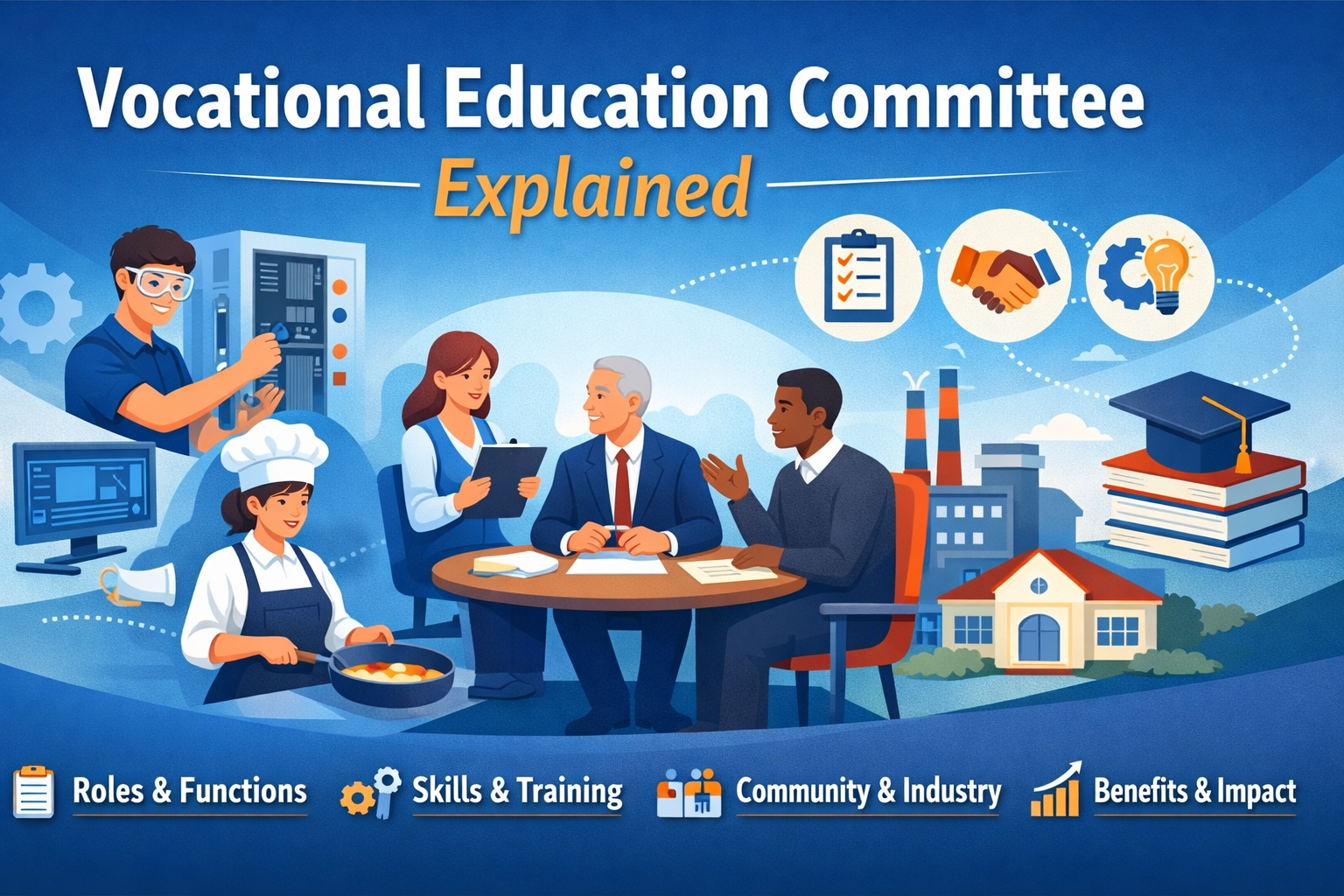
Practical and career-focused learning plays an important role in modern education. Many readers come across this topic when trying to understand who oversees technical training, skills programmes, and community-based learning opportunities that prepare students for employment.
This subject matters because vocational systems do not run on their own. Behind many training programmes, there are organised bodies that help shape policy, manage resources, and connect education with the needs of learners, industries, and local communities.
What Is a Vocational Education Committee?
A vocational education committee is generally understood as a body linked with the organisation and support of technical, career-based, and skills-focused education. It helps guide programmes that prepare learners for trades, workplace roles, and practical careers.
Rather than focusing only on academic study, this type of committee supports learning built around real-world ability. That includes training centres, further education pathways, and courses designed to help students gain useful knowledge for employment and personal development.
Purpose of This Educational Body
The main purpose of such a committee is to improve access to practical learning. It helps build systems that support students who want career training, technical knowledge, and direct preparation for working life.
Another important goal is to make education more relevant. By encouraging programmes linked to real labour market needs, this structure helps learners move toward jobs, apprenticeships, and further training with stronger confidence and direction.
Historical Background
The idea developed from the growing need for organised technical education. As societies became more industrial and specialised, communities needed structured ways to train workers for skilled roles across many sectors.
Over time, education authorities began creating formal systems to oversee vocational learning. These bodies helped turn scattered training efforts into more coordinated programmes with clearer standards, better planning, and stronger links to public needs.
Core Functions and Responsibilities
These committees often carry out a wide range of responsibilities. Their work may include planning education services, supporting vocational schools, managing training resources, and helping maintain quality across practical learning programmes.
They may also contribute to policy direction and institutional development. By helping educational providers work toward shared goals, they support a more effective environment for students, instructors, and training centres alike.
How the System Works
In many cases, this kind of organisation works through collaboration. Decision-makers, educators, community representatives, and administrators may come together to identify local priorities and improve how training is delivered.
This cooperative model helps practical education remain current and useful. It also allows schools and training providers to respond more effectively to changes in industry demand, community needs, and student expectations.
Role in Technical and Career-Based Learning
A committee of this type plays a major role in shaping technical education. It supports courses that focus on applied knowledge, hands-on experience, and job readiness rather than theory alone.
This is especially important in fields where learners need direct preparation for real work settings. By supporting structured training, the system helps students build confidence, competence, and stronger pathways into future employment.
Connection with Local Communities
One of the strongest features of vocational governance is its relationship with the local community. Effective training systems work best when they reflect regional industries, employment patterns, and social needs.
That local focus can create meaningful benefits for everyone involved. Students receive more relevant training, employers gain access to skilled workers, and communities become stronger through better educational planning and workforce development.
Benefits for Students and Institutions
A well-organised vocational structure brings clarity and consistency to practical education. Instead of disconnected programmes, learners benefit from more coordinated systems designed to meet real goals and support long-term career growth.
Institutions also gain from better planning and support. Stronger frameworks can improve course quality, resource use, and educational access, making technical learning more respected and more useful across different settings.
Common Challenges
Like any education body, these committees face challenges. Limited funding, policy changes, and fast-moving labour markets can make it difficult to keep training relevant, modern, and responsive to emerging industries.
There can also be social challenges. In some places, practical education is still wrongly viewed as less valuable than academic pathways, even though many vocational routes lead to stable careers, advanced study, and long-term opportunity.
Relevance in the Modern Education System
Today, skills-based education remains essential. Modern economies depend on trained workers, adaptable learners, and education systems that can respond to technological and social change.
This makes vocational leadership more important than ever. From digital skills to advanced technical training, organised oversight helps ensure that learners are prepared not only for current jobs but also for future opportunities in a changing world.
Misunderstandings About Vocational Oversight
A common myth is that this kind of committee deals only with basic trade instruction. In reality, its role often includes broader planning, educational access, policy support, and connections between learning and employment.
Another misunderstanding is that practical education offers limited ambition. In truth, skills-based learning can open the door to strong careers, entrepreneurship, further study, and meaningful contributions to society and local economies.
Why This Topic Matters
Understanding how vocational education is organised helps readers see the bigger picture behind training and workforce preparation. These systems do more than manage courses. They support the development of people, communities, and future industries.
That is why the term remains important. It represents the planning and leadership behind many forms of practical education, helping learners gain the tools they need for work, independence, and long-term progress.
Conclusion
The idea behind a vocational education committee becomes much clearer when viewed through the lens of opportunity and structure. It is about supporting practical education in a way that benefits learners, institutions, and the wider community.
As education continues to evolve, this type of body remains highly relevant. It shows that learning is not only about academic theory but also about helping people build useful skills, pursue careers, and contribute to society in real ways.
