


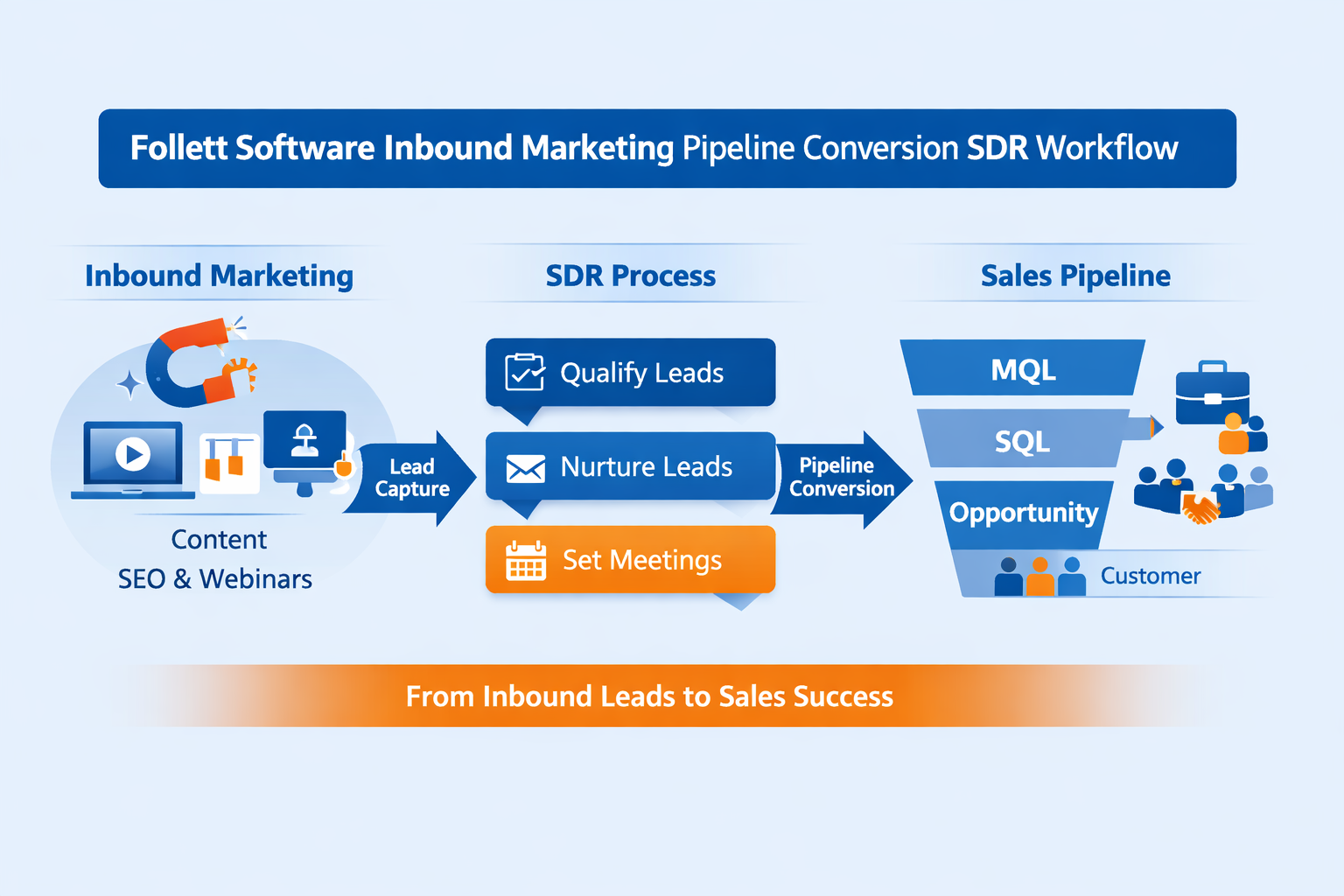
The Follett Software inbound marketing pipeline conversion SDR workflow describes a structured approach to turning inbound interest into real sales opportunities. It combines marketing attraction, lead management, qualification, and sales development into one connected system that improves efficiency and growth.
In today’s competitive software market, generating leads is not enough. Businesses also need a repeatable process to guide those leads toward action. That is why the Follett Software inbound marketing pipeline conversion SDR workflow is such a valuable framework for improving conversion rates and building stronger customer relationships.
What Is Follett Software Inbound Marketing Pipeline Conversion SDR Workflow?
At its core, the Follett Software inbound marketing pipeline conversion SDR workflow is a process that connects inbound marketing efforts with sales development activities. It focuses on attracting potential buyers, placing them into a pipeline, and helping SDRs move them toward meaningful sales conversations.
The phrase includes several important concepts. Inbound marketing brings prospects in through content and digital channels. Pipeline conversion measures how well leads move through each sales stage. SDR workflow covers the daily steps sales development representatives use to qualify, nurture, and pass leads to the main sales team.
Why Inbound Marketing Matters for Follett Software
Inbound marketing matters because it brings in people who are already interested in solutions, information, or industry support. Rather than interrupting cold audiences, inbound strategies create demand by offering value first. This makes the resulting leads more informed and often more likely to engage.
For a software-focused business model, inbound channels can include blog posts, downloadable resources, educational pages, webinars, demos, and SEO-focused landing pages. These tools attract users at different stages of the buyer journey and support the broader Follett Software inbound marketing pipeline conversion SDR workflow with consistent lead generation.
Understanding the Sales Pipeline
A sales pipeline is the step-by-step path a lead follows from first interaction to final decision. In the Follett Software inbound marketing pipeline conversion SDR workflow, the pipeline acts as a map that shows where leads enter, how they are handled, and what actions move them forward.
Typical pipeline stages may include visitor, lead, marketing qualified lead, sales qualified lead, demo booked, opportunity, and customer. By defining these stages clearly, teams can identify where prospects drop off, where SDRs add value, and where conversion improvements are needed most.
The Role of SDRs
SDRs, or Sales Development Representatives, play a central role in the Follett Software inbound marketing pipeline conversion SDR workflow. They act as the bridge between marketing and sales by reviewing incoming leads, reaching out quickly, asking qualifying questions, and determining whether a lead is sales-ready.
This role is important because not every inbound lead is prepared for a buying conversation. SDRs filter interest, identify real potential, and keep the sales team focused on stronger opportunities. Their follow-up speed, messaging quality, and consistency can directly influence overall pipeline conversion performance.
Key Stages
Lead Capture
Lead capture is the starting point of the Follett Software inbound marketing pipeline conversion SDR workflow. It happens when a prospect fills out a form, downloads a guide, requests a demo, signs up for a webinar, or interacts with another inbound asset created by the marketing team.
Effective lead capture depends on strong calls to action, simple forms, relevant landing pages, and clear value. When done well, it does more than collect names and emails. It also provides early insight into the prospect’s needs, interests, and possible buying intent.
Lead Qualification
Lead qualification is the stage where SDRs review whether a lead is a good match for the solution. In the Follett Software inbound marketing pipeline conversion SDR workflow, this can involve evaluating company type, goals, urgency, budget signals, product fit, and level of engagement.
This step prevents the pipeline from becoming crowded with weak opportunities. It also improves handoff quality by ensuring only serious and relevant prospects move forward. Strong qualification gives the sales team better conversations and supports higher conversion rates throughout the funnel.
Lead Nurturing
Not every lead is ready to buy immediately. That is why lead nurturing is a necessary part of the Follett Software inbound marketing pipeline conversion SDR workflow. SDRs and marketing teams use nurturing to stay visible, build trust, and guide prospects toward readiness.
Lead nurturing may include email sequences, personalized follow-ups, educational content, reminders, and targeted messaging based on behavior. These actions help maintain momentum without pressure. Over time, nurturing can turn uncertain interest into a qualified opportunity that is ready for a sales discussion.
Sales Handoff
Sales handoff happens when the SDR determines that a lead is ready for the next level of conversation. In the Follett Software inbound marketing pipeline conversion SDR workflow, this transition must be smooth, clear, and supported by complete lead notes and context.
A poor handoff can damage trust and create repeated questions that frustrate the prospect. A strong handoff gives the account executive the lead’s history, pain points, priorities, and engagement details. This helps the next conversation feel informed, relevant, and more likely to convert.
How Pipeline Conversion Works
Pipeline conversion refers to the percentage of leads that move from one stage to another successfully. This means tracking how many captured leads become qualified leads, how many qualified leads book meetings, and how many opportunities become customers.
Conversion improves when timing, relevance, and follow-up quality work together. Fast response times, clear communication, personalized outreach, and accurate qualification all help move prospects forward. A strong pipeline conversion process also makes it easier to forecast growth and understand where improvements will have the biggest impact.
Common Challenges
One common challenge is poor lead quality. If inbound campaigns attract the wrong audience, SDRs waste time sorting through low-fit contacts. This weakens productivity and causes frustration across teams. Better targeting and content alignment can reduce this issue significantly.
Another challenge is weak coordination between marketing and SDR teams. When definitions, goals, or handoff rules are unclear, good leads may be missed or delayed. The Follett Software inbound marketing pipeline conversion SDR workflow performs best when every stage has ownership, clarity, and measurable expectations.
Best Practices to Improve
A strong improvement strategy starts with speed and consistency. SDRs should respond to new inbound leads quickly, ideally while interest is still fresh. Clear outreach templates, flexible conversation scripts, and strong CRM discipline all help create a more reliable and scalable workflow.
Lead scoring is another powerful practice within the Follett Software inbound marketing pipeline conversion SDR workflow. By assigning value to behaviors such as page visits, form fills, and email engagement, teams can prioritize the most promising leads and focus effort where conversion potential is highest.
Tools and Technology Supporting
Modern tools make the Follett Software inbound marketing pipeline conversion SDR workflow easier to manage and improve. CRM platforms store lead data, track activities, and organize pipeline stages. Marketing automation tools support campaigns, scoring, email nurturing, and behavior-based follow-up triggers.
Analytics platforms also play an important role by showing where leads come from, how they interact, and where they drop off. With the right tools, teams can replace guesswork with visibility. This improves decision-making, helps SDRs stay organized, and allows leadership to optimize the full conversion process.
Metrics to Track
Measuring results is essential for long-term success. Important metrics in the Follett Software inbound marketing pipeline conversion SDR workflow include lead-to-MQL rate, MQL-to-SQL rate, average response time, meeting booking rate, email engagement, and opportunity creation rate.
These numbers reveal how efficiently the system is working. For example, a strong lead volume with poor meeting rates may signal weak qualification or poor outreach. Regular measurement helps teams locate bottlenecks, compare performance over time, and make smarter improvements based on evidence rather than assumptions.
How Marketing and Sales Alignment Strengthens
Marketing and sales alignment is one of the most important success factors in an effective lead conversion process. Marketing attracts and educates leads, while SDRs validate interest and move qualified prospects forward. If the two teams are disconnected, pipeline conversion usually suffers.
Alignment becomes stronger when both teams agree on lead definitions, follow shared goals, and review performance regularly. Feedback loops help marketing understand lead quality, while SDR insights improve campaign targeting. When teams work together, the entire workflow becomes more efficient, more focused, and more profitable.
Conclusion
The Follett Software inbound marketing pipeline conversion SDR workflow is more than a collection of separate tasks. It is a connected system that turns marketing attention into sales momentum. When built carefully, it improves lead quality, strengthens handoffs, and supports predictable revenue growth.
Success comes from clear stages, strong SDR execution, relevant nurturing, good tools, and close alignment between teams. Businesses that refine this workflow over time are better positioned to convert inbound interest into real outcomes. In a competitive software environment, that kind of structure becomes a true advantage.
For any organization focused on sustainable growth, improving the Follett Software inbound marketing pipeline conversion SDR workflow is a smart investment. It helps create a better experience for prospects, a better process for teams, and a stronger foundation for long-term performance.
