


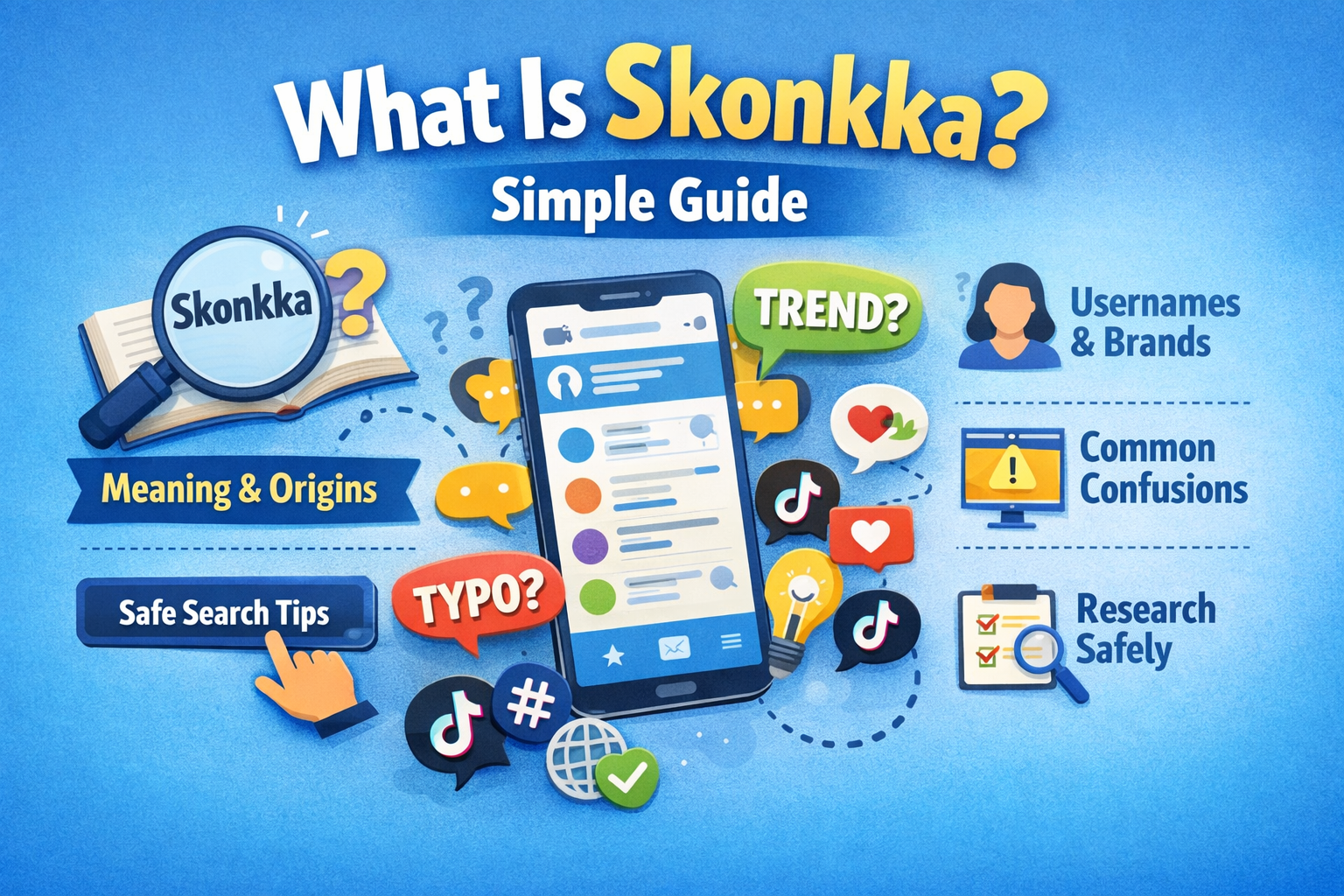
Skonkka is a word people often notice online because it looks unusual and doesn’t have one fixed meaning everywhere. In many cases, it appears in comments, captions, or usernames, which makes it feel like a “mystery term” at first glance.
Most of the time, it works like a label that depends on where you found it. That’s why one person may see it as a name, while another sees it as a trend word. The surrounding content usually explains what it stands for.
Why People Search for Skonkka
People search for Skonkka because it sparks curiosity. When a word looks unfamiliar, users want to know whether it has a real meaning, a cultural reference, or some viral context attached to it. This is common with internet-made terms.
Another reason is uncertainty. Some users wonder if it is a typo, a slang phrase, or a hidden reference. Searchers usually want a simple answer: what it means in the place they saw it and whether it is trustworthy.
Where the Word Skonkka Comes From
The origin of Skonkka can vary, because online terms don’t always start from one clear source. It might be a made-up word created for a username, a brand handle, a private joke, or a niche community tag that later spread.
In other cases, it may come from a spelling variation of another term. This happens often when people repeat words from audio clips, fast captions, or unclear screenshots. Small spelling changes can create totally new searches.
Skonkka vs Similar Words (Common Confusions)
Skonkka vs “Skokka”
One of the most common confusions is mixing Skonkka with “skokka.” They look close, but they are not the same. Skokka appears in some language contexts as a recognised word, while the other spelling is less standard.
This matters because search engines treat similar-looking words as different topics. If you are researching the term, always double-check the original spelling from the post or page you saw first.
Is Skonkka a Real Dictionary Word?
A dictionary word is something you can confirm in trusted language references. Skonkka does not consistently show up as a standard dictionary entry, which is why it often feels unclear and open to interpretation.
That said, many internet words exist in real usage before they become official. The best approach is to treat it as context-based. Instead of forcing one definition, confirm how people are using it in that specific place.
Skonkka as a Trend Word Online
Sometimes this word behaves like a trend keyword, especially when people repeat it without explanation. That can happen in meme culture, comment sections, short videos, or inside jokes where the audience already understands the reference.
Another factor is content farming. Some pages may publish “explanations” to capture search traffic even if the meaning is not confirmed. That can make it look more official than it really is, so it’s smart to cross-check sources.
How Skonkka Is Used in Sentences
In casual writing, Skonkka is often used like a name, label, or playful expression rather than a strict definition. People may use it to describe a vibe, a user identity, or a specific post without explaining it directly.
You might see it in lines like: “That clip was so random,” or “I keep seeing it in comments,” or “It’s a new handle someone is using.” These examples show how meaning changes with context.
Skonkka on Social Media (TikTok, Reels, X)
On social platforms, Skonkka may show up as a hashtag, a caption word, or a username. In some cases, it links posts with a similar theme. In other cases, it is just a unique tag added to stand out.
To understand it on social media, look at the content around it. Check the creator’s other posts, the comment thread, and the hashtags used nearby. Patterns usually reveal whether it is a joke, a niche label, or just branding.
Skonkka as a Name, Username, or Brand
Many unusual words become popular because they are easy to claim as usernames. Skonkka has a short, memorable sound, which makes it useful for gaming tags, social handles, or creative identity names.
If it’s being used as a brand, you’ll usually see consistency: similar profile pictures, repeated themes, links that connect, and a clear message. If it appears randomly across unrelated sites, it’s more likely just a general internet term.
Is Skonkka Safe to Click or Trust?
The word itself is not automatically risky, but some pages using strange keywords can be low-quality. A few websites use uncommon search terms to attract clicks and then push ads, pop-ups, or confusing redirects.
A simple safety rule is to judge the website, not just the word. If a page looks spammy, has aggressive download buttons, or feels untrustworthy, exit quickly. Stick to clean sources and well-known platforms.
How to Research Skonkka Properly
To research Skonkka properly, start from the exact place you found it. Was it in a caption, a profile name, a comment, or a search suggestion? That first context matters more than random search results.
Then search with added context words, such as “meaning,” “username,” “trend,” or the platform where you saw it. Comparing multiple sources helps you avoid guessing and helps you find the earliest and most reliable usage.
FAQs
People ask if this term is slang. It can be used like slang, but it doesn’t have one universal meaning. Many times, it is simply a playful internet word that takes meaning from the community using it.
Others ask if it’s a typo. That’s possible too, especially if it appears once in a messy post. If it is repeated by the same creator or account, it is more likely intentional. Always confirm by checking the source.
Final Thoughts
Skonkka is best understood as a flexible internet term that can act like a name, label, trend tag, or creative identity. Instead of forcing one meaning, the safest approach is to look at where it appears and how it’s used.
If you want a practical takeaway, treat it as a clue, not a definition. Once you find the original context, you can usually understand what the creator meant and whether the usage is trustworthy or just random noise.
