


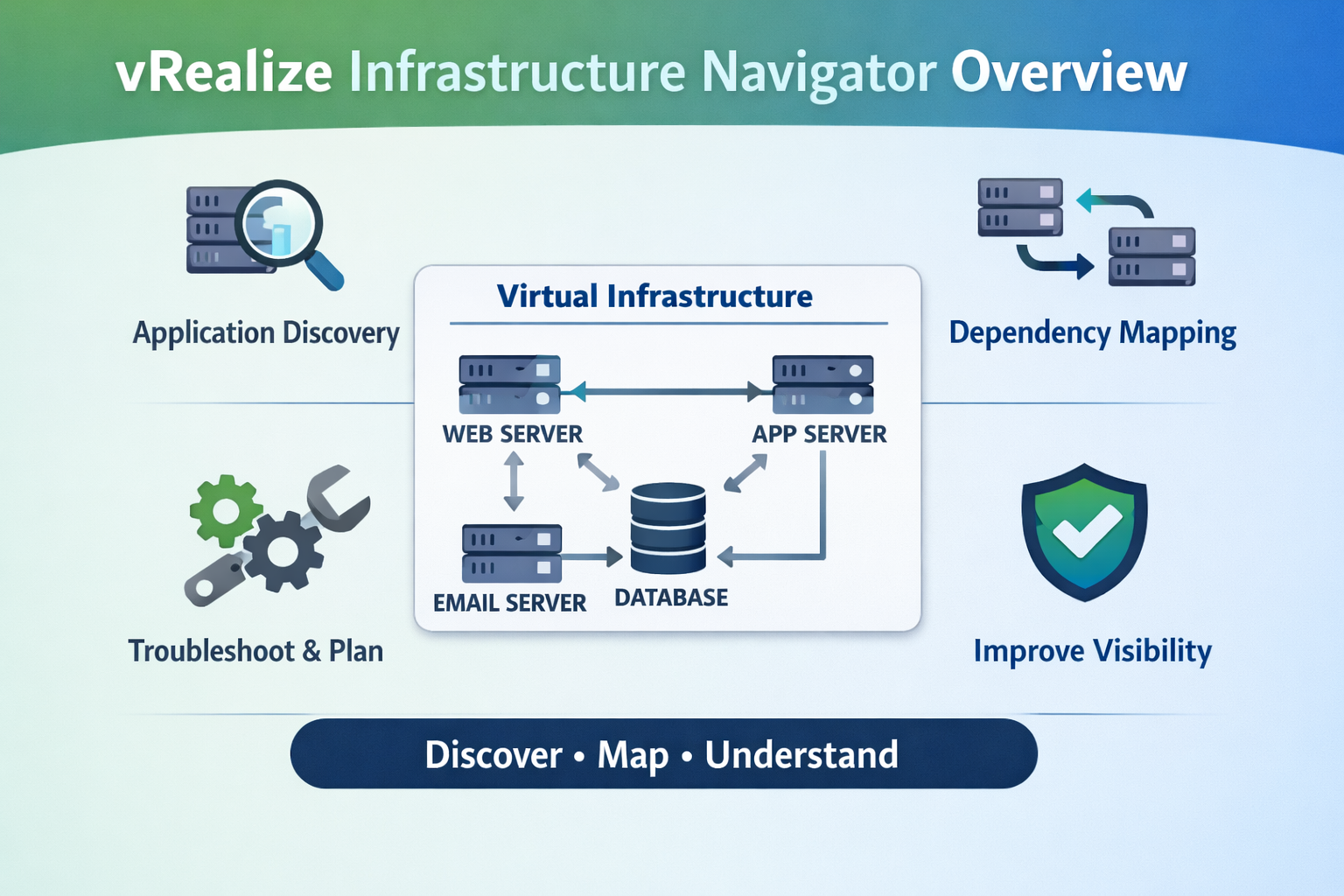
In modern virtual environments, it is not always easy to understand how applications, servers, and services connect with one another. That is where vrealize infrastructure navigator becomes an important topic for IT professionals and system administrators.
This tool was designed to help teams discover application services inside virtual machines and show how those services interact across an infrastructure. With better visibility, administrators can manage systems more confidently and make smarter operational decisions.
What Is vrealize infrastructure navigator?
vrealize infrastructure navigator is a VMware-related solution created to improve visibility into virtualized environments. It helps identify application components running inside virtual machines and maps relationships between systems in a clear and useful way.
Instead of treating each virtual machine as an isolated object, the tool helps administrators see the bigger picture. It shows how different services depend on each other, which is especially helpful in complex enterprise infrastructures with multiple workloads.
Key Purpose
The main purpose of vrealize infrastructure navigator is to make infrastructure easier to understand. In a virtual data center, many applications run together, and their connections are not always obvious without a discovery and dependency mapping tool.
By automatically detecting services and relationships, the tool reduces guesswork for administrators. It supports faster planning, easier troubleshooting, and stronger awareness of how one system change might affect another part of the environment.
Core Features
One of the most useful features of vrealize infrastructure navigator is automatic application discovery. It examines virtual machines and identifies services, processes, and communication patterns that may otherwise stay hidden from daily operations teams.
Another key feature is dependency mapping. This means the tool can show which applications connect to databases, web servers, middleware systems, or supporting services. That visual understanding helps teams manage infrastructure with greater accuracy and less manual effort.
How It’s Works
At a basic level, vrealize infrastructure navigator works by collecting information from virtual machines and analyzing the services running within them. It then builds an organized view of the relationships between those discovered components and connected systems.
This process helps transform raw infrastructure details into actionable insight. Rather than reading disconnected technical logs or manually tracing network relationships, administrators can review a structured representation of their environment for better clarity and control.
Benefits of Using
A major benefit of vrealize infrastructure navigator is better visibility. When IT teams understand how applications are connected, they can investigate problems faster and reduce time wasted searching for causes across multiple virtual systems.
The tool also supports better planning and risk control. If a team wants to patch, migrate, or restart a system, dependency awareness helps them predict the impact. That reduces service disruption and improves the quality of change management.
vrealize infrastructure navigator and Application Dependency Mapping
Application dependency mapping is one of the most valuable concepts in infrastructure management. It refers to the process of identifying how software components, services, servers, and databases depend on one another to function correctly.
vrealize infrastructure navigator supports this process by showing those dependencies in a more understandable form. This is especially useful for multi-tier applications, where front-end services, application servers, and databases work together behind the scenes.
Why Dependency Visibility Matters in Virtual Environments
Virtual environments are flexible, but they can become difficult to manage when many workloads run at the same time. Without dependency visibility, a small change in one machine may unexpectedly affect an application or service elsewhere.
That is why vrealize infrastructure navigator remains a useful topic in infrastructure discussions. It highlights hidden relationships and gives administrators stronger awareness, helping them avoid accidental downtime and make more informed technical decisions.
Common Use Cases
One common use case for vrealize infrastructure navigator is troubleshooting application issues. If an application becomes slow or unavailable, teams can review related components and identify whether the issue is linked to another service or dependency.
Another use case is migration planning. Before moving workloads to a new cluster, host, or platform, administrators need to know which systems communicate with each other. Dependency discovery reduces mistakes and supports smoother infrastructure transitions.
Advantages for Businesses
Businesses benefit from vrealize infrastructure navigator because better infrastructure awareness often leads to fewer service interruptions. When application relationships are clearly understood, technical teams can respond to incidents more quickly and avoid unnecessary operational risks.
It also helps organizations improve internal efficiency. Instead of spending large amounts of time manually documenting application relationships, teams can rely on automated discovery and use that time for optimization, planning, and broader service improvements.
Limitations and Challenges
Like many specialized infrastructure tools, vrealize infrastructure navigator may present challenges for organizations that expect simple deployment or modern cloud-native coverage. Legacy-focused tools can sometimes feel limited in fast-changing hybrid environments.
Another challenge is that some businesses now prefer broader observability platforms with advanced analytics and newer integrations. While the concept behind the tool remains valuable, organizations may compare it with more current solutions before making decisions.
vrealize infrastructure navigator vs Other Infrastructure Tools
Compared with general monitoring tools, vrealize infrastructure navigator focuses more on discovery and dependency relationships than on basic alerting or performance graphs alone. Its strength lies in helping teams understand how services are connected across virtual infrastructure.
Other tools may offer broader dashboards, log analysis, or cloud monitoring features, but they do not always present application dependencies in a clear way. That makes vrealize infrastructure navigator especially interesting for environments where relationship mapping matters most.
Best Practices and Final Thoughts
To get the most value from vrealize infrastructure navigator, teams should review discovered relationships regularly and use the information during troubleshooting, migration planning, and infrastructure changes. Dependency maps become more useful when they are part of ongoing operational workflows.
In the end, vrealize infrastructure navigator overview is more than a product description. It represents an important idea in IT management: understanding how systems work together. That visibility helps organizations reduce risk, improve stability, and manage virtual environments with greater confidence.
Conclusion
As virtual infrastructures grow in size and complexity, visibility becomes one of the most valuable assets for administrators. vrealize infrastructure navigator helps turn hidden service relationships into understandable information, giving teams a clearer view of the applications they manage.
Whether the goal is troubleshooting, migration planning, or dependency awareness, the concept behind vrealize infrastructure navigator remains highly relevant. It reminds organizations that strong infrastructure management is not only about monitoring performance, but also about understanding connections.
